Growing is uncomfortable, and not just physical growth, but any form of positive change at all. It is by nature; as the process requires the sacrifice what parties may have now for the potential of more in the future. From human rights movements to regime change to a child’s growth spurts, growing can hurt in the moment.
Journalism is a fundamentally uncomfortable practice, as it directly targets the inhibitors of growth in societies worldwide. There is a push-back inherent in its correct usage, as not all power structures are upheld by moral and time-withstanding principles.
As such, journalists have more strength with education. At the 2026 Associated College Press Spring National Media Conference in San Francisco, California, faculty and students from across the state and the greater western United States attend in an effort to promote growth among aspiring journalists and their educators alike.
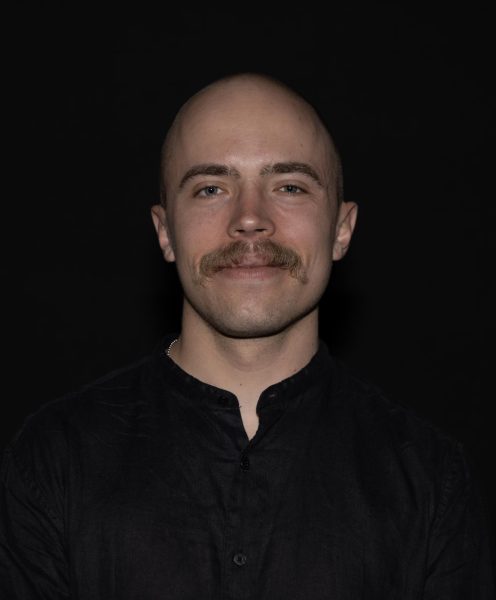
Aric Johnson, Graduate Programs Recruiter and Adviser for the Journalism and Mass Communications Department at Arizona State University (ASU), highlighted the growing pains of a changing industry during an interview at the conference. With over half of United States adults receiving news through social media according to Pew Research Center, journalists are somewhat forced to adapt.
“Is vertical video the thing? You know, I think that’s going to be around for a while… you have to be able to make one without being completely uncomfortable.”
Johnson taught for seven years at ASU’s Walter Cronkite School of Journalism and Mass Communication before transferring to his current position. He lauded the program for its “hands-on” approach, which directly addresses the discomfort that comes with growth in the practice.
At the conference positive change was afoot. The examples of programs such as ASU’s is not meant as an endorsement, but rather a show of how placing oneself in an uncomfortable position with the intent of growth is happening in the bounds of journalism.
“If you’re a writer, that’s great, but you’re gonna have to know how to do videos… Those are radically different skill sets. So being good at all those things can be really hard, but you need to figure out how, I think you do need to, because it makes you more flexible.”
In a world where the President of the U.S. Donald Trump has made attacks on Female reporters a regularity, and whose presidency has profited his family near four billion dollars last year according to The New Yorker, journalism is at its utmost importance.
Social media is a new and evolving entity and as a platform to journalists. It forces change.
“I think journalism is strong, it’s just way more fractured than it’s ever been,” Johnson said. “[A]nd there’s all these different pieces, plus journalists are going to be more bouncing around to different kinds of careers that are very different.”
As journalists gather at the conference, which takes place at the Hyatt Embarcadero overlooking the San Francisco piers, their discomfort is somewhat eased. Through the gift of a safe and educating space at such a spot, students and staff can acknowledge that they ask the same questions.
Journalists are public figures in that their work directly relates to and is meant for the public; they may juggle over brand image versus moral action in terms of growth and how to affect it.
“People were talking about this 20 years ago.” Johnson said, speaking on the argument. “If I had an answer for that question, I’d be a billionaire.”
While journalists do pursue money, they mainly pursue growth, both in themselves in the communities they serve. As was the spirit of the conference.