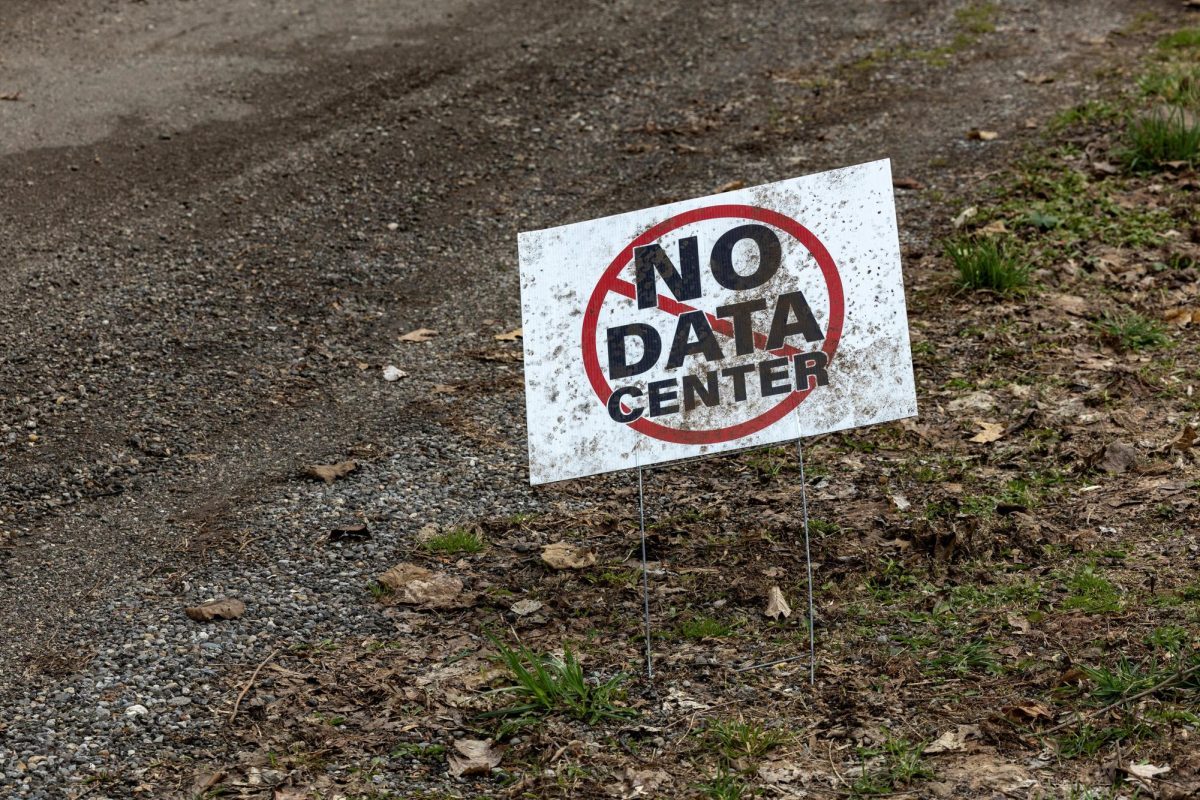
Data centers have been at the center of attention in recent months. Cities across the country are increasingly looking to develop and expand their capacity and seem eager to hop on the battery storage bandwagon. However, little regulation exists to oversee their rapid growth and consider the impact they have upon neighboring communities.
Data centers can be described as large physical facilities that house computer servers, storage systems and networking equipment used to store, process and distribute massive amounts of data. They boast their ability to manage the increased computing needs of modern technology such as AI. This requires an advanced cooling system that uses large amounts of water and energy, meaning utilities must build new infrastructure. These costs are often paid by ratepayers, not developers.
“A data center can use as much electricity as thousands of homes while employing only a few dozen people,” states community leader, Samuel Brown. He continues, “they are essentially ticking time bombs, it’s not a matter of if, but when they catch fire. They pose a massive risk to public health and exposure to hazardous material.”
Many have pushed back and urged their local city governments to reconsider their plans to move forward with data center construction. Just this month, community members in Monterey Park successfully halted a proposed 247,000-square-foot development. Community organization No Data Center Monterey Park notes on their website, “the proposed data center would significantly increase energy use, strain public infrastructure and bring long-term environmental and quality-of-life impacts…March 4 was a major victory for Monterey Park…but the work is not finished. We still need Council to pass the [permanent city-wide data center ban] ordinance and we still need to win the June 2 election to reinforce the ban.”
In early February, Senator Sasha Renée Pérez introduced SB 978, the Data Center Community Accountability Act, “to protect Californians and utility ratepayers as large data centers rapidly expand across the state. California is home to roughly one third of the nation’s data centers and demand is projected to surge in the coming years…” as noted in the press release.
As of January of this year, the City of Industry is considering zoning adjustments to allow for the development of data centers and energy battery storage facilities. In 2024, a proposal was submitted to the city to convert part of the Puente Hills Mall into a 10-megawatt center, amassing over 1.6 million-square-feet. The Clean Air Coalition (CAC), a community organization dedicated to protecting public health in southeast LA County, is gearing up to oppose these efforts.
“We’ve been at this for years. It’s another version of the same things we’ve been fighting, industries that put profits before people,” states Rebecca Overmyer-Velasquez, coordinator for CAC. For decades, they’ve been pushing back against Quemetco in the City of Industry, the last remaining lead battery smelter west of the Rocky Mountains, processing hazardous waste from across the country. Community member and CAC volunteer Marilyn Kamimura adds, “we’re bearing the brunt of it for all of LA County, we’ve had the landfill, the lead battery smelter and now they want to build a data center…which is not only environmentally dangerous but also supports the expansion of the use of AI that will take away jobs and increase profits for industry.”
A coalition, No Data Center SGV, has been formed by founding groups SGV Progressive Action, Avocado Heights Vaquer@s and the No Data Center MPK, with many more signing on in support. Additionally, Brown recently co-founded SGV Public Record alongside Daniel Talamantes and Edlin Simental. It serves as “an online hub examining land use planning and governance issues and how it intersects with the issue of environmental justice, “ Brown adds.
Support has continued to grow, over 800 community members attended Brown’s presentation held in Rowland Heights, eager to learn more and voice their concerns. The coalition’spetition has over 14,000 signatures with plans for protests near the Puente Hills Mall.
Coalition members urge community members to continue to get involved, Overmyer-Velasquez says, “these are efforts that communities need to be part of to make sure they reflect our needs!” Kamimura agrees, “as part of the future generations making up the communities adjacent to the City of Industry, our persistence and voices to protect our families matter. What you do now will make a difference.”