
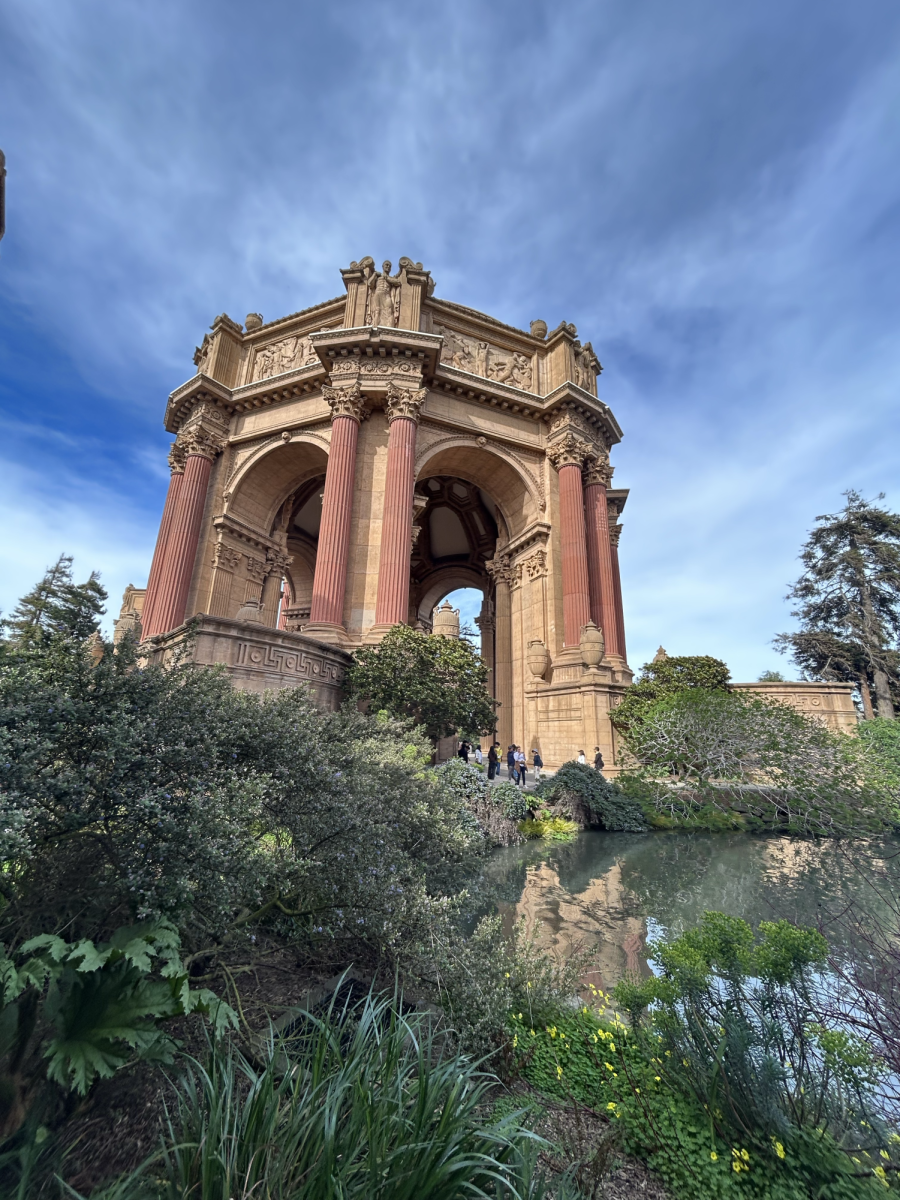
Standing beside a peaceful lagoon surrounded by towering columns and detailed architecture, the Palace of Fine Arts remains one of San Francisco’s most recognizable landmarks.
While thousands of visitors stop to take photos each year, the structure represents much more than a scenic attraction, it tells a story of art and history.
The Palace of Fine Arts was originally built in 1915 for the Panama, Pacific International Exposition, a world’s fair held in San Francisco.
The completion of the Panama Canal and the city’s recovery after the devastating 1906 earthquake and fire.
Bernard Maybeck was the architect behind the Palace of Fine Arts.
The Palace of Fine Arts in a way has the look of old Roman architecture.
Aroudnd the palace is a lagoon which creates a calm feeling for visitors.
San Francisco native, George Pasquet gave an insight of how the palace has a relaxing feel and how he likes to visit it.
“Almost all the time when I get nervous or have a weird feeling, I like to come here because the relaxation and the quietness makes me feel good and it makes me realize that there is a lot of peace in the world as long as you can find it,” Pasquet said.
From the start to now, it has changed a lot because of weather damage but it still has held for many generations.
Today, it remains the only major surviving structure from the exposition still standing in its original location.
The landmark’s meaning stretches beyond architecture. It serves as a reminder that communities can rebuild after hardship and preserve what matters most.
Following one of the darkest moments in San Francisco history, city leaders used the 1915 exposition to demonstrate resilience and optimism for the future.
More than 100 years later, the Palace of Fine Arts continues to draw visitors from around the world.
Whether admired for its history, artistic design or peaceful setting, the landmark remains a lasting symbol for many.